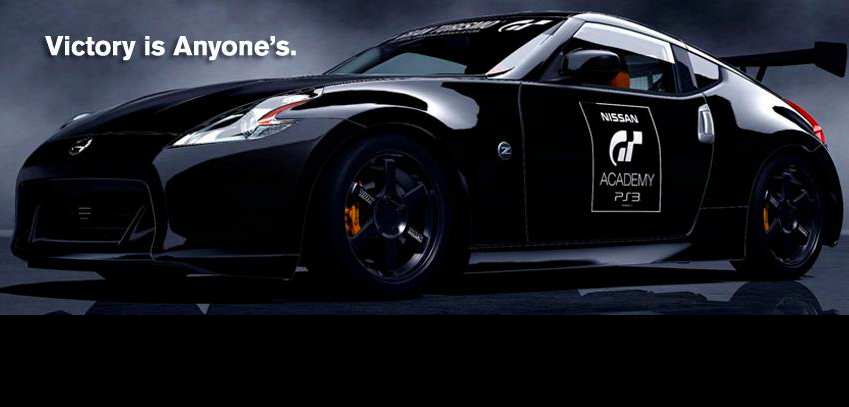
About a year ago, Erich Marx, Nissan’s director of interactive and social media marketing, was tasked with putting the automotive brand on the social map. The company had a social media presence, with a Facebook page and a Twitter feed, but Nissan hadn’t yet mapped its strategy in social.
“In April 2011, social media had gotten to a size where we could not ignore it,” Marx said. I was asked to take over the digital side of our marketing business, and their exact words to me were: ‘Put Nissan on the map.’ I was left to decide what that means. Did it mean most engaging, most followers, most platforms? I was not sure. It is wonderful to have that kind of open-ended opportunity, but it’s also kind of scary.”
After some planning and strategizing, Marx figured out that in order for Nissan to succeed in social, the brand would need to focus on engaging content, social CRM and issue resolution, and research.
“Phase one was having engaging content so that [Nissan social properties] were a cool place to hang out,” Marx said. “Phase two was social CRM, or taking care of our customers who have issues or questions. We teamed with Salesforce and Radian 6 so that we could find unhappy customers and proactively solve their issues, boosting loyalty at the same time. We wanted to take care of our owners better. Phase three is social research. That’s a big opportunity. We have millions of fans that raised their hand and said, ‘I like Nissan.’ Why wouldn’t we try to get feedback on new products, features or marketing campaigns?”
The results? Nissan added 622,236 Facebook fans in just a year, a 320 percent increase year-over-year. What’s notable is that the company was able to do so with a fairly limited paid media budget, just under $500,000, according to Marx. For its models’ Facebook pages, Nissan added 227,000 fans collectively, an increase of 173 percent, again with a limited paid media budget. Zuum, a company that tracks Facebook engagement (not affiliated with Nissan at all), found that Nissan has the highest engagement among automotive brands on Facebook.
On Twitter, Nissan added 57,794 Twitter followers on @NissanNews, bringing the brands from 11,310 to 69,104 followers. This represents a 510 percent increase. No paid media was used to build up the fan base.
Nissan has more than 620,000 circlers on Google Plus. The page was launched in November 2011. Nissan is second to Ford in size among all of the automotive brands on Google Plus. But it is important to note that Ford was a chosen partner by Google and had a Google Plus pilot page, so it got a head start there. Engagement on the Nissan Google Plus page has increased steadily since the launch.
“I would say one of the big learnings this year is we are a car company and people follow us because we make cool cars,” Marx said. “We are focused on creating content that would be of relevance to auto enthusiasts. We use social media to break news before it is common knowledge. I think it is because of that that we are seeing tremendous engagement and growth in social media. Additionally, we are the only auto brand with a 100 percent electric car (Leaf). The Leaf has a passionate following who are a very vocal and social-aware community, and they have been a good source of social brand evangelizing.”


More in Marketing

Future of Marketing Briefing: Accenture’s Whalar bet: own the room when creator marketing gets complicated
The Whalar deal is Accenture running the same play it ran on programmatic — only this time it got there earlier.

How DUDE Wipes turned to unconventional sponsorships after sports inventory prices surged
As sports sponsorship costs rise, brands like DUDE Wipes are turning to emerging leagues and unconventional placements.

Agency AI pitches are starting to face harder questions
As agencies race to sell proprietary AI the future of marketing, 3C Ventures argues advertisers need more proof.