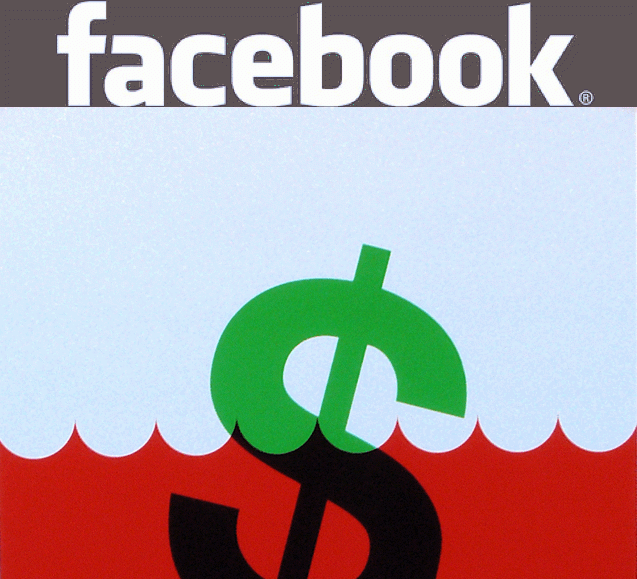
Since its IPO, Facebook has been in a world of pain. The AdContrarian predicted as much on the day of the IPO and this week explained the house of cards that not only the IPO hysteria was based on, but also Facebook’s revenue model. Something else to pay attention to: the cascade effect of the dismal Facebook IPO on other social networks and tech companies, as its overvaluation could have tempered expectations from sites like Twitter or Kayak, who may think to go public. It’s quite possible that Facebook single handedly — and simultaneously — popped and prevented a bubble. Maybe.
The amazing thing about the Facebook IPO hysteria is that the whole foundation was built on — as my dear mother used to say — shit and glue. Facebook’s revenue model is dependent on selling advertising space, and there is compelling evidence that paid advertising on Facebook has thus far been uniquely ineffective. But we live in an age in which the marketing and advertising industries trust unreliable and foolhardy pundits and experts more than we trust facts or the evidence of our own eyes… Could it be that the Facebook face plant will serve the purpose of injecting some reality into the fantasy world of advertising and marketing? Not a freakin’ chance.
Click to read the article at the AdContrarian and follow him on Twitter @adcontrarian.


More in Media

Reuters and Time adopt bot-blocking whitelists to rein in AI crawlers
Reuters and Time adopt a ‘block-all’ AI bot strategy, part of a broader publisher move toward whitelist-only access.

Google’s AI opt-out leaves publishers with a choice they can’t safely use
The CMA has, on paper, given publishers a right to refuse AI in search. But because it’s opt-out, and Google is slow-walking the data needed to judge the impact, that right is barely usable, publishers say.

YouTube’s AI remix push exposes a looming reckoning for the creator economy
YouTube’s Gemini Omni integration has highlighted some of the major problems generative AI poses in the creator economy.